
Menu
About The Author
MAHMOOD ALI AYUB
Mahmood Ali Ayub’s life is woven from threads of resilience, adventure, and lyrical introspection. Born on August 12, 1948, in the fortified village of Alamsher in northwestern Pakistan, his earliest memories include slipping from a cot into a rushing stream—only to be saved by a life-saving rock—and surviving a harsh, unsanitary boil-lancing that left him with a permanent mark on his neck. Raised in a mud-walled home where his family shared cramped quarters with their livestock, Ayub was deeply influenced by his devout father and fiercely determined mother. From them, he learned the value of education, moral courage, and the sanctity of human dignity—lessons that would shape every chapter of his extraordinary life.
Ayub’s formative years were marked by a rich tapestry of experiences. After Jesuit schooling in Peshawar, he spent part of his childhood in Iran, where his parents’ diplomatic postings opened windows onto diverse cultures and worldviews. These early encounters with different societies sparked in him a lifelong fascination with human development and social justice. This passion guided him to a global career with the World Bank and the United Nations Development Programme (UNDP), where he worked tirelessly to address economic disparities and promote sustainable progress across continents.
Ayub’s formative years were marked by a rich tapestry of experiences. After Jesuit schooling in Peshawar, he spent part of his childhood in Iran, where his parents’ diplomatic postings opened windows onto diverse cultures and worldviews. These early encounters with different societies sparked in him a lifelong fascination with human development and social justice. This passion guided him to a global career with the World Bank and the United Nations Development Programme (UNDP), where he worked tirelessly to address economic disparities and promote sustainable progress across continents.

Alongside his professional journey, Ayub’s personal life flourished. He met and married artist–actress Mansoora Hassan, beginning a partnership that has lasted more than four decades. Together, they raised two daughters, Alia and Mariam, and have been blessed with four grandchildren, who remain central to Ayub’s life and inspiration. His family has been both a grounding force and a source of joy amid the demands of international work and creative pursuits.
Despite a career that spanned development economics and diplomacy, poetry remained Ayub’s steadfast refuge and creative outlet. Whether composing verses in the margins of diplomatic reports or during late-night card games by a crackling fire, his poetry reveals a profound engagement with the human condition. Drawing inspiration from poets as diverse as Faiz Ahmad Faiz, John Keats, and the remarkable women poets Sylvia Plath, Forugh Farrokhzad, and Perveen Shakir, Ayub’s writing bridges cultural divides and champions voices too often silenced by patriarchy and injustice.
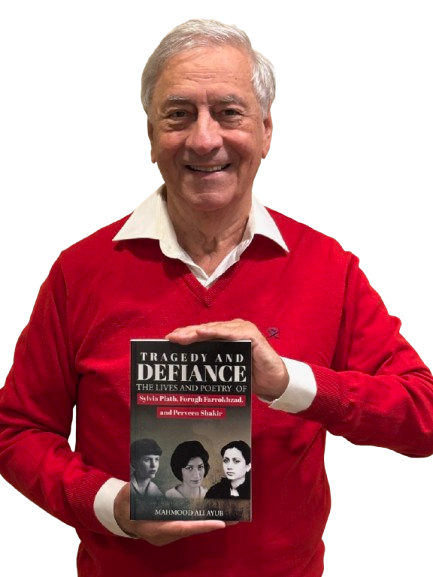
As a scholar, Ayub has published extensively on themes of development, justice, and the transformative power of verse. His notable works include Tragedy and Defiance: The Lives and Poetry of Sylvia Plath, Forugh Farrokhzad, and Perveen Shakir—a groundbreaking comparative study of three poets who challenged cultural constraints—and Women Who Dared to Write, which celebrates female literary pioneers. His writings reveal a rare blend of economic insight and poetic sensitivity, making him a unique voice in both academic and literary circles.
Currently, Ayub is putting the final touches on his much-anticipated autobiography, Climbing Down From the Mountain. This memoir promises an intimate and unvarnished look at the joys and tragedies that have shaped his life, from his rugged childhood and diplomatic adventures to the deeply personal moments of love, loss, and reflection. Through this work, Ayub invites readers to walk alongside him on a journey of resilience, hope, and the enduring power of storytelling.
As a scholar, Ayub has published extensively on themes of development, justice, and the transformative power of verse. His notable works include Tragedy and Defiance: The Lives and Poetry of Sylvia Plath, Forugh Farrokhzad, and Perveen Shakir—a groundbreaking comparative study of three poets who challenged cultural constraints—and Women Who Dared to Write, which celebrates female literary pioneers. His writings reveal a rare blend of economic insight and poetic sensitivity, making him a unique voice in both academic and literary circles.
Currently, Ayub is putting the final touches on his much-anticipated autobiography, Climbing Down From the Mountain. This memoir promises an intimate and unvarnished look at the joys and tragedies that have shaped his life, from his rugged childhood and diplomatic adventures to the deeply personal moments of love, loss, and reflection. Through this work, Ayub invites readers to walk alongside him on a journey of resilience, hope, and the enduring power of storytelling.